
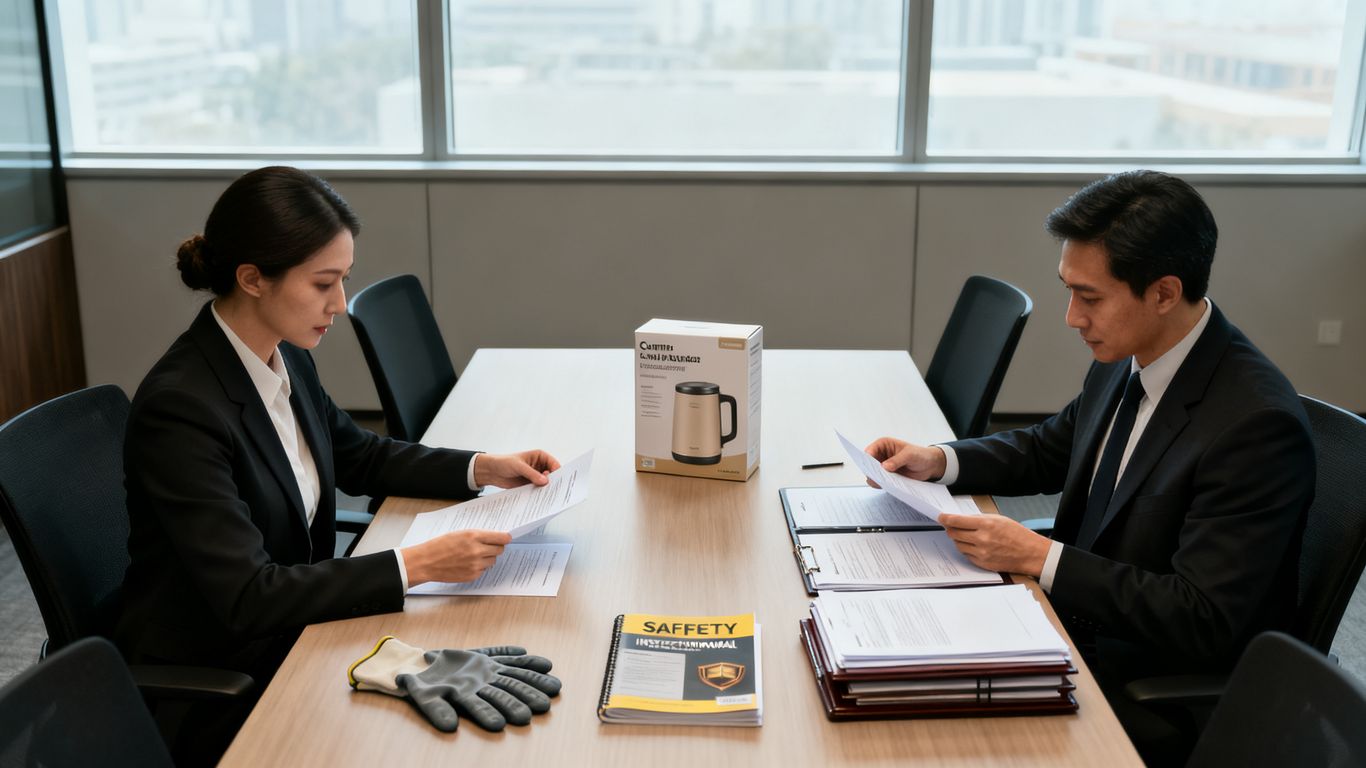
A product liability case usually turns on the product’s condition, the circumstances of the injury, and the legal theory asserted. Businesses may challenge whether a defect existed, whether it caused the harm, or whether the defendant can be held responsible under the applicable law. The available arguments vary by jurisdiction, and a product liability overview can help explain how claims may involve different parties and theories.
Claims based on design defects, manufacturing defects, and inadequate warnings
A design-defect claim generally challenges the product’s planned design, while a manufacturing-defect claim alleges that an individual item departed from its intended specifications. A warning claim focuses on whether instructions or safety information adequately addressed a risk. A business may dispute any part of the alleged defect, including whether the risk was unreasonable or whether a different design or warning would have prevented the injury.
Differences among strict liability, negligence, and warranty claims
The claim’s legal basis affects what the parties need to prove, even when several theories arise from the same incident. Broadly, a case may focus on the product’s condition, the defendant’s conduct, or a promise associated with the sale. These distinctions are part of the common defense arguments raised in product liability disputes.
- Strict liability generally focuses on whether a product was defective and caused harm, subject to the jurisdiction’s rules.
- Negligence centers on whether a defendant failed to use reasonable care and whether that failure contributed to the injury.
- Warranty claims may turn on the terms of an express or implied promise and the requirements for showing a breach.
Because these theories ask different questions, evidence that matters to one may not resolve another. The claim’s legal theory matters when assessing what a defense must establish, and some cases involve more than one theory at once.
How state law affects available defenses and proof requirements
Product liability law is not uniform across the United States. State statutes and court decisions can affect the elements of a claim, the treatment of user conduct, and the evidence a court may consider. A Missouri litigation example illustrates why arguments discussed in one state should not automatically be treated as rules in another.
Challenging whether a defect caused the injury
A plaintiff generally must connect an alleged product defect to the injury, but the exact proof required depends on the claim and governing law. A defense may therefore examine the product’s condition, the incident itself, and other possible causes. These questions are often fact-intensive, particularly when the product has been used, repaired, or damaged since the event.
Testing whether the product was defective when it left the defendant’s control
A business may argue that the product was not defective when it left its control, or that the condition alleged by the plaintiff arose later. Relevant evidence can include the product’s design and manufacturing records, inspection information, and its physical condition after the incident. The argument is stronger when the available evidence can distinguish an original defect from later damage or wear.
Identifying alternative causes of the injury
An injury may have more than one possible explanation, so a defense can examine the surrounding circumstances rather than treating the product as the only cause. Depending on the evidence, other factors might include an unrelated medical condition, the way the product was installed, or the conditions in which it was used. An alternative cause does not by itself disprove a claim; its significance depends on whether it weakens the alleged connection between defect and injury.
Using expert evidence to challenge the plaintiff’s theory
Experts may be asked to assess the product, reconstruct an incident, or evaluate whether the alleged defect could have produced the reported harm. A defense may challenge the assumptions, methods, or factual basis behind an opposing expert’s opinion. Courts apply jurisdiction-specific standards to expert evidence, so an expert disagreement does not automatically decide the case.
Disputing whether the product was used as alleged
The account of how a product was used may affect both defect and causation questions. A business may compare testimony with physical evidence, records, photographs, or the product’s instructions. If the evidence supports a different sequence of events, the defense can argue that the plaintiff’s explanation does not fit the available facts.
Defenses based on the user’s conduct
A user’s actions may matter to responsibility for an injury, but their legal effect differs from state to state and from claim to claim. Businesses may argue that the product was used in an unexpected way, that a risk was knowingly accepted, or that the user’s carelessness contributed to the harm. These arguments require attention to what was reasonably foreseeable and to the rules governing the particular claim.
Establishing product misuse and whether it was foreseeable
A product-misuse defense typically asserts that the product was used for a purpose or in a manner outside its intended or reasonably anticipated use. Whether that argument helps depends in part on foreseeability: an unusual use may still be predictable enough that a manufacturer should account for it. Evidence about the product’s design, instructions, and ordinary use can help a court assess the distinction.
Applying comparative or contributory negligence rules
Some jurisdictions allow a plaintiff’s share of fault to reduce damages, while others apply rules that can bar recovery in certain circumstances. The details depend on state law and may also depend on the legal theory asserted. A defense may point to a user’s conduct, but the court or factfinder must apply the jurisdiction’s allocation rules to the evidence.
Showing that the plaintiff knew of and voluntarily accepted a risk
A defendant may argue that the injured person knew about a particular danger and chose to encounter it. The issue is not always resolved by showing that a product carried a warning or that a risk was generally familiar; the evidence must fit the legal standard in the relevant jurisdiction. The plaintiff’s understanding, available alternatives, and circumstances of use may all matter.
Distinguishing misuse from ordinary carelessness
Not every mistake amounts to product misuse. A momentary lapse or imperfect handling may be different from using a product in a substantially unintended way, and some legal rules treat those situations differently. Courts may also consider whether the conduct was foreseeable when deciding whether it relieves a business of responsibility.
Defenses involving product changes and responsibility
A product’s condition after sale can complicate efforts to identify when a defect arose and who may be responsible. Businesses may examine alterations, repairs, component selection, and the roles of other entities in the supply chain. The result depends on the evidence and on statutes and court decisions that vary by jurisdiction.
Showing that a substantial alteration occurred after the product left the business
A defendant may contend that a substantial change after the product left its control created the dangerous condition or contributed to the injury. The key questions can include what changed, who made the change, and whether it affected the product’s safety. A change does not necessarily defeat a claim if the alleged defect existed beforehand or the later change was foreseeable under applicable law.
Assessing modifications, repairs, and maintenance by others
Repair and maintenance records can help show whether a product was altered, improperly serviced, or used despite a known problem. The defense may compare those records with the product’s condition and the timeline of events. At the same time, routine maintenance or a repair does not automatically establish that someone else caused the injury.
Applying the component-part defense to products incorporated into a larger system
A component maker may argue that its part was incorporated into a larger product and that it did not control the finished design. The defense’s availability can depend on the component’s role, the integration process, and whether the component itself was allegedly defective. Applicable law may also consider what the component maker knew or could reasonably anticipate about the finished product.
Determining which businesses in the supply chain may be liable
A product may pass through several hands before reaching a user, including manufacturers, distributors, and retailers. The law may permit claims against different participants, but the basis for responsibility and any available defenses can differ. Identifying each entity’s role helps clarify who made, supplied, or sold the product and what evidence relates to that party.
Defenses involving warnings and user knowledge
Warning defenses address whether safety information was adequate and whether any alleged shortcoming made a difference to the injury. A business may rely on the content, placement, and intended audience of instructions, along with evidence about what the user knew. The analysis is specific to the risk and the circumstances of use; a warning’s mere presence does not settle the question.
Demonstrating that warnings and instructions were adequate
A defendant may argue that a warning clearly described the relevant hazard and explained how to avoid it. Courts can consider whether the information was understandable, appropriately placed, and suited to the expected user. Evidence about the risk, the product, and the way it was used helps determine whether the warning addressed the danger at issue.
Applying the sophisticated user doctrine
In some jurisdictions and circumstances, a defendant may argue that an intermediary or user had enough knowledge to understand a product’s hazards. The doctrine’s scope and requirements vary, and it does not apply simply because a product was used in a workplace or by an experienced person. A sophisticated user doctrine discussion describes one legal approach, but it should not be mistaken for a rule that applies in every state.
Considering the learned intermediary doctrine where applicable
For certain products and settings, a defendant may argue that warnings were properly directed to a qualified intermediary rather than to the ultimate user. Whether the doctrine applies depends on the product, the relationship between the parties, and governing law. The defense may examine what information the intermediary received and whether it was communicated or acted upon.
Evaluating whether a warning could have prevented the injury
Even if a warning is alleged to be inadequate, the parties may dispute whether a different warning would have changed the user’s conduct. Evidence about what the plaintiff knew, how the product was used, and whether the hazard was avoidable can inform that question. The defense may argue that the injury would have occurred regardless, while the plaintiff may present evidence of a safer choice that a sufficient warning would have prompted.
Regulatory compliance and state-of-the-art evidence
Compliance with regulations and the knowledge available when a product was made may be relevant to a defense, but neither necessarily resolves liability. The value of this evidence depends on the governing law, the scope of the relevant standard, and the defect alleged. A careful analysis distinguishes evidence supporting a defense from a legal rule that conclusively bars a claim.
Using compliance with safety regulations as supporting evidence
A business may point to compliance with applicable regulations as evidence that its product met recognized requirements. The significance of compliance depends on the regulation and state law; a regulatory minimum may not answer every question about safety or warnings. A court may therefore consider compliance alongside other evidence rather than treat it as automatic proof that no defect existed.
Showing that a design reflected knowledge and technology available at the time
A defense may assess a design in light of the scientific and technical information reasonably available when the product was developed or sold. This can involve evidence about feasible alternatives, known risks, and the limits of contemporary technology. The relevant date and legal test vary, so later developments do not necessarily establish what a business should have done earlier.
Distinguishing industry standards from legal safety requirements
Industry practice may offer context about how products were designed or tested, but customary practice and legal sufficiency are not always the same thing. A defendant can use standards or common practices to support its position, while a plaintiff may argue that those practices did not adequately address a risk. Their weight depends on the specific standard and the jurisdiction’s evidentiary rules.
Assessing federal preemption as a defense in regulated industries
In some regulated fields, a defendant may argue that federal law displaces or limits certain state-law claims. Preemption is a technical, claim-specific question that depends on the statutory scheme, agency requirements, and relevant court decisions. Regulatory oversight alone does not establish that a claim is preempted.
Time limits and other statutory defenses
Procedural deadlines and statutes can limit when a claim may be filed or which parties may be sued. Their application often depends on when an injury occurred, when it was or reasonably could have been discovered, and the type of claim involved. Because these rules are state-specific, a deadline that applies to one case may not apply to another.
Applying the statute of limitations to the claim
A statute of limitations generally sets a period for filing a lawsuit, but the start date and length can vary by jurisdiction and claim. Some rules focus on the date of injury, while others may account for when the injury or its cause was discovered. A defendant may argue that a filing came too late, and the court must assess the applicable statute and any relevant tolling rules.
Using statutes of repose to limit older claims
A statute of repose may set an outside deadline tied to an event such as a product’s sale or delivery, regardless of when an injury is discovered. Such statutes differ from limitations periods and may have distinct exceptions. Their reach and constitutionality can also depend on state law and the type of claim.
Reviewing state-specific protections for sellers and distributors
Some states provide circumstances in which a seller or distributor may seek dismissal or a limitation on liability, particularly when another party is alleged to have designed or manufactured the product. The details and exceptions vary, and a seller’s role in the product’s design, warnings, or distribution may matter. The defense should be evaluated under the statute that governs the case rather than assumed from general principles.
Checking exceptions that may extend or bar a claim
Exceptions can affect filing periods or statutory defenses, including rules for minors, delayed discovery, or particular types of conduct. Other provisions may restrict claims even when a plaintiff files within an ordinary limitations period. Reviewing the governing law and case timeline is essential because a small factual difference can change which rule applies.
