
Selecting the right door for your industrial facility isn’t just about security or aesthetics; it’s a decision that shapes workflow, energy efficiency, and even safety. In the high-stakes world of warehouses, factories, and loading docks, the choice between rolling steel doors and high-speed doors can have far-reaching impacts.
Overview of Industrial Door Needs
Industrial spaces demand much more from their doors than a simple barrier. With trucks coming and going, employees on the move, and sensitive goods inside, reliability and performance become non-negotiable.
Key Functions and Requirements for Industrial Spaces
A door in these environments must deliver on several fronts:
– Security to protect valuable assets.
– Speed to maintain efficient operations.
– Durability to withstand constant use.
– Insulation to manage internal temperatures.
– Safety features that protect workers during daily routines.
Common Challenges in Commercial Door Applications
Industrial doors face tough conditions: frequent impacts, weather exposure, and wear from repeated cycles. Maintenance downtime can disrupt entire shifts, so every minute counts when a door isn’t working as it should.
Understanding Rolling Steel Doors
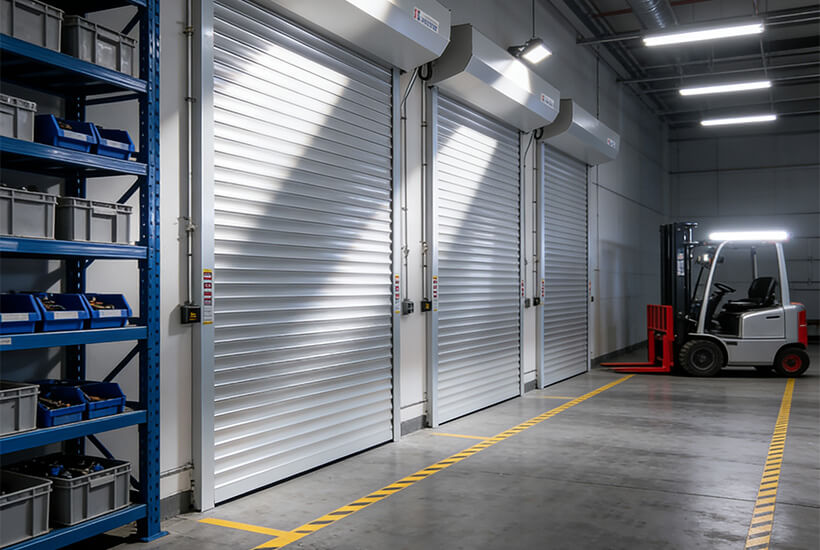
Rolling steel doors have long been a staple in manufacturing and distribution facilities thanks to their sturdy construction.
Construction and Material Features
Made from interlocking steel slats that coil above the opening, these doors offer robust protection and can handle the rigors of heavy use. The steel construction makes them highly anti-theft and weather-resistant.
Typical Use Cases in Industrial Settings
Commonly found in warehouses, service bays, and parking garages, rolling steel doors are the go-to solution when durability and security are top priorities.
Advantages: Durability, Security, and Cost
The key strengths of rolling steel doors include:
– Exceptional durability against impacts.
– High security due to steel composition.
– Lower upfront costs compared to specialized high-speed models.
– Reliable performance over many years with proper care.
Limitations and Maintenance Considerations
However, they do have their drawbacks. Rolling steel doors are heavier, operate more slowly, and can be noisier than modern alternatives. Maintenance often focuses on spring tension and motor components, and service calls may require specialized technicians.
Exploring High-Speed Doors
High-speed doors represent technological evolution in industrial design, prioritizing rapid operation and smart automation.
Design and Operational Mechanism
These doors typically use lightweight materials like reinforced fabric or flexible PVC and can zip open and shut in seconds. Their mechanism is built for speed, often featuring soft bottom edges for safety and advanced sensors to prevent collisions.
Ideal Environments for High-Speed Doors
You’ll see high-speed doors in cold storage facilities, pharmaceutical environments, and anywhere frequent access with minimal air exchange is vital.
Benefits: Speed, Energy Efficiency, and Workflow Optimization
The standout advantages include:
– Rapid open-close cycles that minimize waiting time.
– Significant energy savings by reducing heat or cold loss.
– Enhanced productivity in high-traffic areas.
– Quiet operation compared to steel doors.
Potential Drawbacks and Upkeep
High-speed doors can be more susceptible to damage from impacts, and their advanced electronics mean repairs often require specialized expertise. Upfront costs are generally higher than rolling steel doors.
Comparative Performance Analysis
The contrasts between these two door types become clear when you look at the numbers:
| Feature | Rolling Steel Doors | High-Speed Doors |
|————————|———————–|————————|
| Security | Excellent | Good |
| Speed | Slow (10-20 sec open) | Fast (2-5 sec open) |
| Durability | Very High | Moderate |
| Energy Efficiency | Moderate | High |
| Noise | Loud | Quiet |
| Maintenance Cost | Moderate | Higher |
| Installation Complexity| Moderate | High |
Impact on Operational Efficiency
A slow, heavy door can bottleneck operations in a busy warehouse. High-speed doors, on the other hand, keep goods moving and environments stable. Less waiting at the threshold means more productivity and better climate control, especially important for food or pharmaceutical storage.
For especially high-traffic areas, high-speed doors excel, but in locations where security trumps speed, rolling steel remains king.
Cost Considerations
Initial Investment and Installation Costs
Rolling steel doors typically cost less to purchase and install. High-speed doors, due to their complex mechanics and materials, require a greater initial investment.
Long-Term Maintenance and Repair Expenses
Maintenance for rolling steel doors is straightforward, focusing on moving parts and springs. High-speed doors require regular calibration and electronic servicing, which can add up over time.
Return on Investment and Lifecycle Value
While rolling steel doors offer a lower purchase price and long lifespan, high-speed doors often repay their higher costs through energy savings and improved productivity.
Making the Right Choice for Your Industrial Space
Ultimately, your decision should reflect your facility’s unique needs. Do you prioritize security above all? Is speed and energy efficiency more important for your workflow? Mapping these priorities to the features of each door is key.
Consulting with professionals who understand both options, such as the team at Door Doctor commercial door repair, can help assess your current setup and recommend solutions that minimize downtime.
Future Trends and Innovations in Industrial Doors
The next generation of industrial doors is already on the horizon. Expect more smart integration, with doors syncing to facility management systems, and increased use of sustainable materials. Automated diagnostics and predictive maintenance will likely become standard, letting facility managers detect issues before they cause interruptions.
In a world where every minute and every degree of temperature control can affect the bottom line, the right choice of industrial door is more than a detail, it’s a strategic advantage.
